Plenty of premieres at the 2015 Salzburg Festival
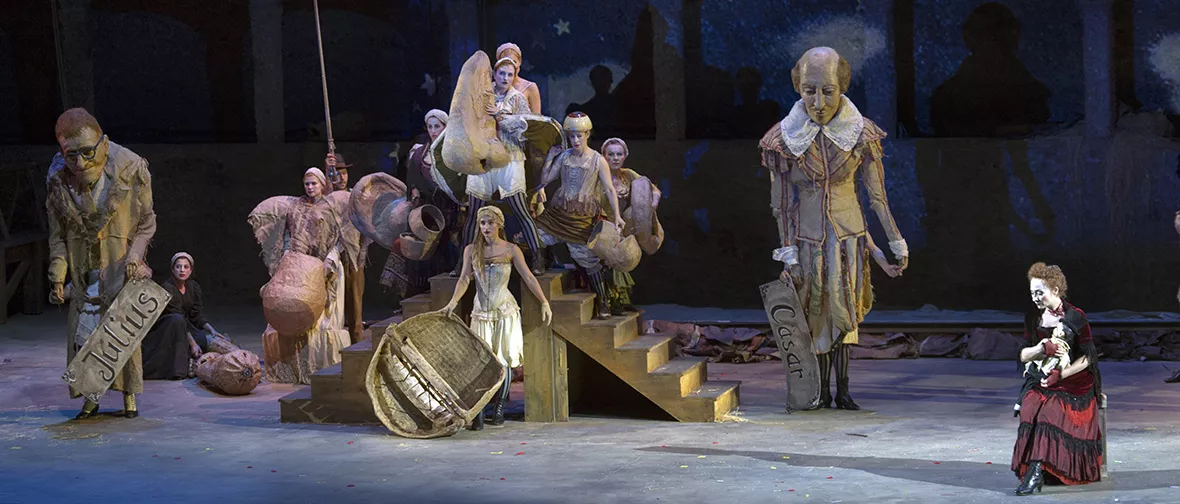
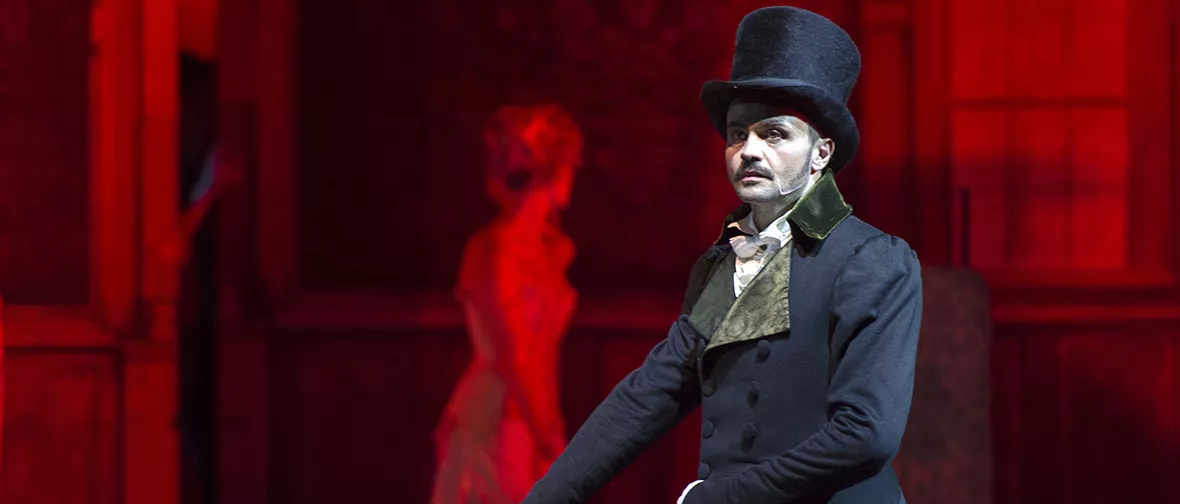
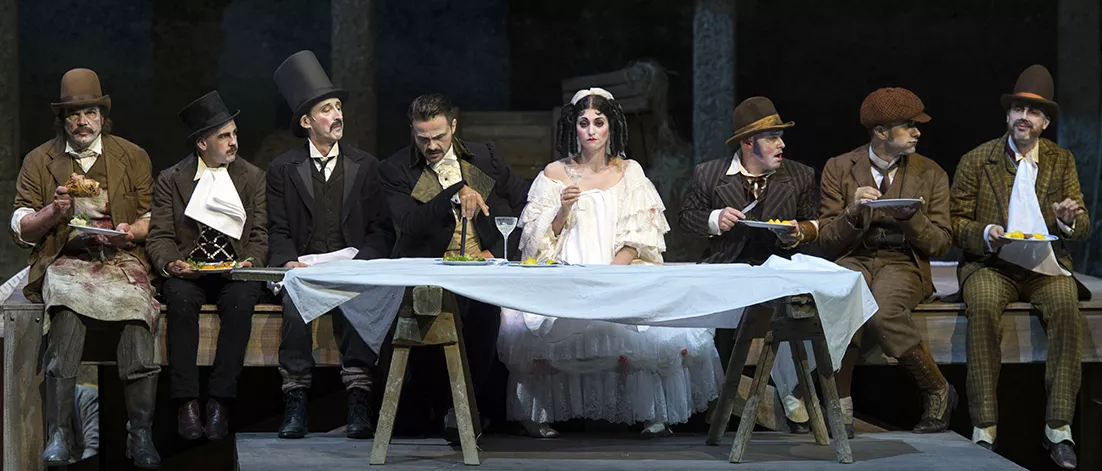
Premiere on the banks of the River Salzach: the Threepenny Opera made its debut at the Salzburg Festival in 2015 – not in the well-known production first presented in Berlin in 1928, but in a version arranged by the Grammy and Tony Award winner Martin Lowe. With the kind permission of the copyright holders, the music of Kurt Weill was given a contemporary polish with new arrangements and different instruments. The more modern music served as a backdrop for the original lyrics written by Bertolt Brecht.
According to the theatre programme for the play, the Salzburg adaptation is a ‘unique experimental version’ – a sentiment underscored by the play’s revamped name: Mack the Knife – A Salzburg Threepenny Opera. The play took to the stage a total of eight times during the summer of 2015. The sound system was provided by d&b audiotechnik. Not least thanks to the ArrayProcessing technology, it turned out to be one of the stars of the show, delivering a brilliant performance in the acoustically challenging setting of Salzburg’s Felsenreitschule theatre.
Sound reinforcement with the Y-Series
The festival organizers dipped into the Salzburg festival coffers to purchase eighteen Y8s, six Y12s and six Y-SUBs for the Mack the Knife production in Salzburg. All systems will find a variety of other uses in future, so they will not just be made available to the Felsenreitschule theatre.
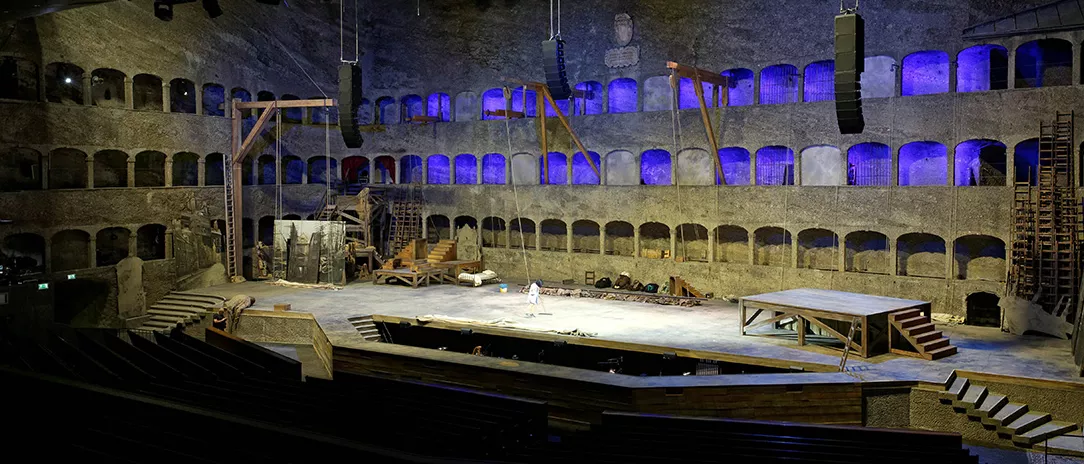
The sound designer Bobby Aitken, known for his expertise in many a Broadway production, selected a left/centre/right arrangement for the Threepenny Opera. The outer arrays comprised seven Y systems, while the centre array was configured with eight Y loudspeakers. The Y12 loudspeakers with their wider dispersion were mounted at the bottom of the arrays as was to be expected. The subwoofers were also flown with three Y-SUBs each as part of the left and right arrays. Their kidney-shaped dispersion pattern was extremely well received in the Felsenreitschule theatre.
All of the loudspeakers were driven by 4-channel D20 amplifiers connected in time-proven analog manner with copper wire even though a modern digital console was used during the performance.
The d&b Y-Series beat a number of products from leading competitors in a shoot-out which took place in March 2015. In addition to delivering outstanding sound quality, the d&b solutions won over the decision-makers with their compact design, meaning fewer obstructions for the audience and lighter equipment.
ArrayProcessing
The Felsenreitschule theatre is one of the many regular venues used for the Salzburg Festival. The location’s striking stage design is not the only feature that makes this famous venue so popular. The theatre has 96 arcades carved into a natural rock face arranged in three tiers. These were also used as a backdrop for the production of Mack the Knife – A Salzburg Threepenny Opera, as they provided an ideal projection area.
The new d&b ArrayProcessing tool was used to meet the acoustic challenges laid down by the Felsenreitschule theatre. Based on the expert support of the specialists at d&b audiotechnik, completely new acoustic measurements were taken of the theatre hall and the sound system was perfectly set up using the new ArrayCalc technology. Working in collaboration with the sound designer Bobby Aitken, a variety of possible configurations were assessed before working out the best solution – an arrangement that left nothing to be desired. The additional amplifiers required for the use of ArrayProcessing were hired for the duration of the opera.
All of the systems specialists agreed that with ArrayProcessing the tonal balance was considerably improved in all areas of the audience – especially in the upper decks, where the sound received a much more ‘solid foundation’, much to the delight of the audience. On the whole, with ArrayProcessing the sound was surprisingly even, down to every last seat in the house. The previous emphasis on high frequencies which was noticeable and annoying for some listeners in the seats on the upper decks was completely eliminated. Sound reverberating off the rock face, which the more astute members of the audience could make out especially in the low midrange section, was drastically reduced thanks to the skilfully fine-tuned settings. “With ArrayProcessing, now more than ever we have the means to balance out specific sound irregularities,” states Dr. Edwin Pfanzagl-Cardone, head of sound engineering and acoustics at the Salzburg Festival. Pfanzagl-Cardone has run the sound engineering and acoustics department of the multi-repertory company (opera, concert, theatre, ballet) since 2001.
“You could say that we are longstanding d&b clients,” he states with noticeable satisfaction. “Our famous production of Everyman was staged at the cathedral square for many years with three d&b C602s as the main PA. What’s more, we had up to 20 d&b E3s which were driven at the time by the AKG DSP 610 M system. Back then delta stereophonics were used, strongly recommended by Prof. Wolfgang Ahnert. For many years now, F1s, F2s and B1s have been featured at the Club Republic, another popular stage location during the festival.”
Successful premieres
There were plenty of premieres in Salzburg in 2015. The Threepenny Opera was staged for the first time at the Salzburg Festival, line array loudspeakers from d&b audiotechnik made their debut in a musical production in the Felsenreitschule theatre, and ArrayProcessing was also used for the first time.
The newly acquired components of the d&b Y-Series and the D20 amplifiers will be used in a number of areas in the future. Strong consideration is being given to their use at Perner Island in Hallein, a well-known outdoor venue for theatre productions. “We’ve often rented line arrays for this venue in the past to meet the needs of the production teams. This will no longer be necessary now,” states Dr Edwin Pfanzagl-Cardone, pointing to the typically long rehearsal times for shows, throughout which the sound reinforcement system has to be up and running. And the systems from d&b audiotechnik will definitely be used more often in the Felsenreitschule theatre in the future: “It’s highly likely we’ll stage another production at the Felsenreitschule in the summer of 2016 and the line arrays will be needed for that,” states Pfanzagl-Cardone.